
In the landscape of modern cricket, few matches carry as much pressure, drama, and narrative tension as a do‑or‑die World Cup clash. For Pakistan, the T20 World Cup Super 8 match against Sri Lanka isn’t merely another fixture. Its a PAK vs Sri Lanka – Do-or-Die Thriller for Pakistan, to stay in the tournament.
It is the crossroads of their journey in this tournament. With qualification hanging by a thread, the Men in Green must deliver a near‑perfect performance to stay alive.The Super 8 stage has not gone to plan for Pakistan.
A rain‑affected encounter against New Zealand yielded just one point, while a narrow two‑wicket defeat to England saw their dream of a smooth run to the semifinals falter. Now, they face a formidable Sri Lankan side that still harbors its competitive fire, despite circumstances pushing them toward elimination as well. For Pakistan, however, this is not optional.
Let’s dive into the story behind the showdown: the tale of both teams, battle of key performers, tactical nuances, and predicted line‑ups.
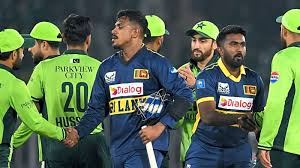
The Super 8 Journey So Far — Pakistan’s Path
Rain Rule Strikes First – PAK vs Sri Lanka – Do-or-Die Thriller for Pakistan
Pakistan’s Super 8 campaign began against New Zealand — a clash that promised excitement and strategic battles between two powerful T20 sides. Yet, rain intervened. Persistent showers meant that no ball could be bowled, and hence both teams shared one point each.
In isolation, one point might seem harmless. But in the context of the tightly contested Super 8 Group 2, it deprived Pakistan of a chance to seize early momentum. With only three matches to prove themselves, that single shared point suddenly felt heavy.
Battle with England — Heartbreak and Narrow Margins
In their second Super 8 fixture, Pakistan faced an England side led by Harry Brook, who announced his arrival in sensational fashion with a brilliant century under pressure. Pakistan posted 164/9 batting first — led by a superb 63 from Sahibzada Farhan — but England chased it down with two wickets and a few balls to spare.
This match was crucial not just for points but for net run‑rate. Despite strong spells from Pakistan bowlers like Shaheen Shah Afridi, and handy contributions from the lower order, the narrow loss meant Pakistan’s hopes of automatic qualification dimmed further.
Points Table Reality Check – PAK vs Sri Lanka – Do-or-Die Thriller for Pakistan
After two matches — one washed out and one lost — Pakistan’s points tally has left them outside the safe zone. England, already strong with two wins, and New Zealand, with their victory over Sri Lanka, have put enormous pressure on Pakistan.
Now, only a massive win against Sri Lanka can give Pakistan a realistic net run‑rate boost and the needed two points to fight for a semifinal berth.
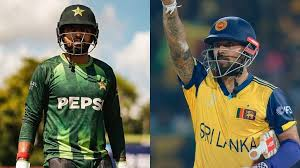
Sri Lanka’s Super 8 Story — Battling for Pride
While Pakistan’s narrative is urgency, Sri Lanka’s has been resilience.
Sri Lanka entered the Super 8 with mixed form. They battled New Zealand fiercely but ended up on the losing side, and then lost to England as well. These results essentially eliminated them from semifinal contention. But in sport, momentum and confidence don’t always follow the standings — and Sri Lanka has quality players capable of turning games on their head.
The Islanders boast strong T20 performers such as Kusal Mendis, Pathum Nissanka, and the spin magnet Maheesh Theekshana, whose ability to trouble batsmen in the middle overs makes Sri Lanka dangerous on any given day.
Despite a difficult Super 8 so far, they won’t simply roll over. For Sri Lanka, this match is not about qualification — it’s about respect, pride, and sending a message. Often in World Cups, teams in this position play freely, unburdened by expectation — and that can be dangerous for an opponent under pressure.
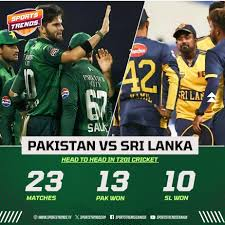
Head‑to‑Head:
Pakistan vs Sri Lanka in T20 Cricket
Cricketing history between Pakistan and Sri Lanka is rich, competitive, and filled with twists.
In 29 T20I encounters, Pakistan leads with 17 wins while Sri Lanka has won 12. This suggests a slight edge for Pakistan historically.
In T20 World Cup meetings specifically, the head‑to‑head is more balanced, indicating that Sri Lanka has lifted their performance in high‑stakes pressure matches.
On Sri Lankan soil, Pakistan has performed well, winning five times out of eight T20Is.
One statistical quirk stands out: Sri Lanka once scored a massive 211/3 against Pakistan in Dubai — the highest total in this head‑to‑head rivalry. Conversely, Pakistan’s lowest against Sri Lanka was just 95 all out in Hambantota. These extremes reveal the volatility of their rivalry, where games can swing dramatically.
Key Head‑to‑Head Record Makers – PAK vs Sri Lanka – Do-or-Die Thriller for Pakistan
- Wanindu Hasaranga — Sri Lanka’s spin all‑rounder is the leading wicket‑taker in this rivalry with 23 scalps at an impressive economy.
- Dasun Shanaka — The Sri Lankan skipper tops the head‑to‑head batting charts among current squad members.
- Kusal Perera holds the record for the highest individual T20I score in PAK vs SL matchups — an 84 that anchored a big Sri Lanka total.
These figures not only reflect individual brilliance but also the strategic dynamic between these teams, Pakistan’s pacers versus Sri Lanka’s spin, aggressive batting versus tactical bowling — a classic cricketing chess match.
Pakistan’s Tournament Form: Who Has Stepped Up?
Pakistan’s overall form in the 2026 ICC Men’s T20 World Cup has been a mixed bag:
Batting Highlights
- Sahibzada Farhan has been Pakistan’s standout batsman in this tournament. With 297 runs in nine matches at an average over 42 and a strike rate near 155, he has combined aggression with consistency — exactly the kind of form Pakistan needs in a chase or big total scenario.
- Salman Ali Agha, the captain, has contributed 225 runs at a blistering strike rate, though his consistency has fluctuated.
These two have formed the core of Pakistan’s batting hope — but beyond them, contributions have been sporadic, which becomes problematic in must‑win games.
Bowling Impact
Pakistan’s bowling statistics are respectable:
- Mohammad Nawaz has impressed with 14 wickets at an economy under 7.0, showcasing his ability to break partnerships and choke runs.
- Usman Tariq, although lesser known, has been effective with his variations, posting 12 wickets at an even lower economy.
The pace battery — including experienced campaigners and young firebrands — remains Pakistan’s strongest suit. If they can take early wickets, especially in pressure games, Pakistan can win with either bat or ball.
Sri Lanka’s Tournament Form: What They Bring
While Sri Lanka’s Super 8 position is bleak, their tournament form isn’t devoid of quality:
Batsmen to Watch
- Kusal Mendis has played some brilliant innings in this World Cup cycle with 322 runs, showing flair, power, and the ability to sustain long T20 knocks.
- Pathum Nissanka matches that aggression with an attacking strike and a healthy average.
These two top-order batsmen can take games away from oppositions early if Pakistan’s new ball bowlers don’t strike.
Bowling Assets – PAK vs Sri Lanka – Do-or-Die Thriller for Pakistan
Sri Lanka’s bowling attack boasts game‑changing players:
- Dushmantha Chameera has been prolific, taking 14 wickets at an impressive strike rate of 9.0, which means he regularly gets breakthroughs.
- Maheesh Theekshana has been Sri Lanka’s leading spinner with 12 wickets, keeping tight lines and building pressure.
This combination of pace and spin diversity makes Sri Lanka dangerous on slow pitches or at night under the lights — conditions where batters can struggle against disciplined bowling.
Predicted Playing XI – Pakistan (Super 8 vs Sri Lanka)
Based on recent team news and performance trends, Pakistan’s most likely XI could be:
- Sahibzada Farhan (Aggressive Opener, Form Player)
- Saim Ayub (Left‑handed Opener — big potential)
- Salman Ali Agha (c) (Captain, Middle Order)
- Babar Azam (Anchor & Tactical Batter)
- Khawaja Nafay (Explosive Middle Order — impact player)
- Usman Khan (wk) (Finisher & Wicketkeeper)
- Mohammad Nawaz (All‑Rounder & Spin Bowler)
- Shaheen Shah Afridi (Strike Bowler & Leader of Pace)
- Abrar Ahmed (Spinner — Control & Variations)
- Salman Mirza (Left‑arm Pacer — New Ball Support)
- Usman Tariq (Death Overs Specialist)
Why This XI?
- Farhan’s form makes him vital at the top.
- Saim Ayub, despite inconsistent numbers, still offers left–right balance and powerplay aggression.
- Agha and Babar provide structure but must accelerate with intent.
- Nawaz, Afridi, and Tariq form a balanced bowling unit with control and variety.
Pakistan’s success will hinge on how these players execute under pressure — particularly in the powerplay and death overs.
Pakistani Players and their role
1) Sahibzada Farhan — Aggressive Opener
Role: Right‑handed opening batter who provides explosive starts and sets tempo in the powerplay. His style is built on fearlessness — hitting pace and spin from the first ball to put bowlers under pressure.
World Cup 2026 Stats So Far:
• Farhan is one of Pakistan’s top performers this tournament. He scored a century against Namibia, becoming only the second Pakistani batter to score a T20 World Cup century.
• He also scored a crucial 63 against England in the Super 8s, contributing the bulk of Pakistan’s total.
Recent Background & Career:
• Farhan has been one of the most consistent Pakistani T20 batters leading into the tournament, having scored over 850 runs in recent T20s with a strike rate above 130 before the WC.
• He has built a reputation as an impact player at the top — someone who can take advantage of powerplay fielding restrictions and lay the foundation for big totals.
2) Saim Ayub — Left‑handed Opener
Role: Aggressive left‑handed stroke player who provides attacking intent in the first six overs. His left‑right combo with Farhan troubles bowlers and disrupts field setups.
World Cup 2026 Stats So Far:
• In this tournament, Ayub has accumulated 63 runs in 4 innings with a high strike rate, though his average hasn’t been strong yet.
Recent Background & Career:
• In T20Is before the World Cup, Ayub was a productive opener with over 1,200 runs in T20 cricket at a strike rate above 135, showing natural ability to attack early.
• Pakistan management likes him for his fearless style and flexibility to bat at various positions.
3) Salman Ali Agha (c)
Role: Middle‑order batter and occasional bowler. As captain, he’s the decision‑maker on the field and responsible for stabilizing middle overs and guiding bowlers tactically.
World Cup 2026 Stats So Far:
• Agha has scored 55 runs in the tournament so far, contributing in the middle overs.
Recent Background & Career:
• Agha has been a consistent presence in Pakistan’s T20 side prior to this World Cup with 800+ T20I runs.
• He brings balance — batting depth and occasional bowling options — and leads by example.
4) Babar Azam — Anchor & Tactical Batter
Role: One of Pakistan’s most experienced batters and the classic anchor. Babar generally builds the innings with placement, timing, and shot selection, and anchors Pakistan’s batting unit.
World Cup 2026 Stats So Far:
• Babar’s returns this tournament have been modest — around 66 runs from his innings so far with a strike rate just above 115.
Recent Background:
• He has a big T20I record — over 4,500 runs at an average near 40 — one of the best in the format.
• However, critics have highlighted his traditional style as sometimes slower in modern T20 tempos.
5) Khawaja Mohammad Nafay
Role: Middle‑order batter known for big hitting late in the innings — a potential finisher or someone who accelerates the run rate when needed.
World Cup 2026 Stats:
• Not enough specific World Cup data available but selected for his impact batting potential.
Recent Background:
• Nafay is a relatively newer international player with a reputation from domestic and franchise cricket as a power hitter, used strategically in death overs or tight situations.
6) Usman Khan (wk)
Role: Middle–late–order batter and backup wicketkeeper. Usman’s role is to finish innings aggressively, strike in the last overs, and handle finishing responsibilities when top order falls short.
World Cup 2026 Stats:
• Usman scored around 44 runs in this tournament with a strike rate around 118.
Recent Background:
• Known for strong finishing capability in T20 cricket, Usman combines power hitting with the ability to rotate strike.
• He has played over a dozen T20I matches, showing promise in high‑pressure conditions.
7) Mohammad Nawaz
Role: Left‑arm spin bowling all‑rounder. Nawaz bowls in the middle overs to tie down runs and picks up key scalps. He also contributes handy runs down the order.
World Cup 2026 Stats So Far:
• Nawaz has bowled 3 matches with 3 wickets and been a control option, although his batting returns in this WC have been limited.
Recent Background:
• Nawaz has extensive T20I experience with Pakistan and is trusted in all phases — especially middle overs and short chases.
8) Shaheen Shah Afridi
Role: Pakistan’s premier pace bowler — one of the best left‑arm fast bowlers in world cricket. Shaheen is known for early breakthroughs and striking with the new ball.
World Cup 2026 Stats So Far:
• Shaheen has taken a few key wickets but had a slightly expensive series in this tournament.
• He also chips in with handy lower‑order runs, though his batting hasn’t featured heavily.
Recent Background:
• A regular and critical part of Pakistan’s bowling attack with 80+ T20I matches behind him.
• He has delivered match‑winning spells throughout his career in all formats.
9) Abrar Ahmed
Role: Right‑arm off‑spin with mystery variations. Abrar bowls in middle overs and picks pivotal wickets. His control and ability to generate turn make him suited for pitches that offer grip.
World Cup 2026 Stats So Far:
• He has bowled but with mixed returns — some wickets, economy a bit high.
Recent Background:
• Before the World Cup, Abrar was one of Pakistan’s most effective spinners with a strong strike‑rate record in T20Is.
• Known for variations that trouble batters, especially on turning tracks.
10) Salman Mirza
Role: Left‑arm fast bowler who supports Shaheen with new ball movement and variation. Can bowl both new ball and in middle overs, offering change of pace.
World Cup 2026 Stats So Far:
• In limited appearances he has taken wickets and maintained a decent economy.
Recent Background:
• Mirza is relatively new internationally, but strong domestic and early international performances earned him selection.
11) Usman Tariq
Role: Part‑time spinner with a focus at the death overs to contain runs and induce mistakes. His bowling is used tactically in short bursts.
World Cup 2026 Stats So Far:
• Tariq has bowled in this tournament and taken a few wickets at moderate economy.
Recent Background:
• As a spin option, Tariq gives Pakistan an extra bowling variation; in some domestic circuits he’s been effective at tight clutch moments.
Predicted Playing XI – Sri Lanka (Super 8 vs Pakistan)
Sri Lanka’s likely XI includes:
- Pathum Nissanka (Top Order Aggressor)
- Kusal Mendis (wk) (Experienced Batter)
- Charith Asalanka (Steady Middle Order)
- Dasun Shanaka (c) (Captain & Finisher)
- Kamindu Mendis (All‑Round Depth)
- Pavan Rathnayake (Young Talent)
- Dunith Wellalage (Spin All‑Rounder)
- Dushmantha Chameera (Pace Strike Bowler)
- Maheesh Theekshana (Mystery Spinner)
- Dilshan Madushanka (Death Overs Specialist)
- Dushan Hemantha (Support Bowler & Tweaker)
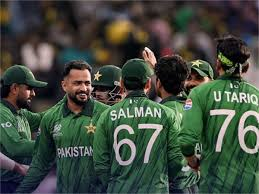
Srilanka Squad details
1) Pathum Nissanka
Role: Right‑handed opening batter who combines stability with fearless power. Nissanka anchors the innings but also accelerates proactively, especially against pace bowling.
World Cup 2026 Performance:
• Nissanka has been one of Sri Lanka’s most consistent batters, scoring heavily in the tournament — including a match‑winning century (100) in a chase against Australia*, where he powered Sri Lanka to an eight‑wicket victory.
• In Super Eight stages, his runs and timing have been crucial in building foundations for Sri Lanka.
Background:
• Nissanka is one of Sri Lanka’s premier white‑ball talents, known for playing long innings with high strike rate. By 2025, he had already crossed 1,100+ T20I runs at a strike rate over 140, showing his class and consistency.
• His technique and temperament make him the linchpin of Sri Lanka’s batting.
2) Kusal Mendis (wk)
Role: Right‑handed batter and wicketkeeper — a key middle‑order stroke‑player capable of aggressive starts and havoc in the powerplay and middle overs.
World Cup 2026 Performance:
• Mendis has scored significant runs this World Cup, including a fifty in Sri Lanka’s big win over Oman and another strong performance in earlier matches, anchoring chases and providing pace.
• He ranks as one of Sri Lanka’s top run‑scorers so far in the event.
Background:
• With over 300+ T20I runs in this tournament cycle and a strike rate near 136–140, Mendis brings experience and aggression in equal measure.
• He’s regularly entrusted with finishing responsibilities and stabilizing innings when early wickets fall.
3) Charith Asalanka
Role: Modern middle‑order batter who anchors partnerships and plays through the innings, contributes with composure and timing.
World Cup 2026 Performance:
• In the Super 8 stage and earlier matches, Asalanka’s contributions have been less explosive but important for building partnerships when required.
Background:
• Asalanka has international experience across formats and is often relied on for technique and stability in the middle order. Not as big a hitter as some others, but a smart match‑tempo player.
4) Dasun Shanaka (c)
Role: Middle‑order batter and captain — a gritty finisher with leadership responsibilities. Shanaka also contributes as a medium‑pace bowler when needed.
World Cup 2026 Performance:
• Shanaka has led Sri Lanka from the front as captain, playing crucial innings and guiding the chase or acceleration as the situation demands.
• He scored 30 in a Super Eight loss to England while trying to rebuild his side.
Background:
• A seasoned campaigner, Shanaka has captained Sri Lanka across T20I cricket with responsibility in both batting and bowling roles.
• Known for tough, game‑aware innings and functional medium‑pace bowling to offer tactical flexibility.
5) Kamindu Mendis
Role: Left‑handed batter and part‑time bowler — offers depth in both departments. He can accelerate scoring or provide useful overs when needed.
World Cup 2026 Performance:
• Mendis has shown glimpses of powerful hitting and speed of scoring — notably contributing in key situations though not consistently huge scores.
Background:
• Recalled to the T20 squad after fluctuating form outside 2025, selectors valued his strike potential and ambidextrous bowling—though he bowls sparingly.
6) Pavan Rathnayake
Role: Up‑and‑coming middle‑order batter with raw power and ability to accelerate quickly against all types of bowling.
World Cup 2026 Performance:
• Showed match‑winning ability with a crucial cameo to help Sri Lanka chase and secure Super 8 qualification at a key stage.
• In group matches, played impactful knocks including a cameo in a big team victory.
Background:
• A relatively new face in international cricket but already rewarded with World Cup inclusion after strong domestic and ODI performances.
7) Dunith Wellalage
Role: Left‑arm spin bowler and useful lower‑order batter — provides control overs in the middle and potentially breaks partnerships.
World Cup 2026 Performance:
• Wellalage has contributed with economical spin bowling and a few key scalps even as Sri Lanka’s bowling unit has faced challenges.
Background:
• Promoted from ODI success and franchise cricket performance, Wellalage offers depth in spin options.
Summary: A spinner with the ability to economise in middle overs and chip in with handy lower‑order runs if required.
8) Dushmantha Chameera
Role: Right‑arm fast bowler who leads the Sri Lankan pace attack — known for aggression and strike‑taking capability, particularly with new ball and short spells.
World Cup 2026 Performance:
• Chameera has been among Sri Lanka’s most effective bowlers this tournament, taking key wickets with good strike rate and maintaining respectable economy.
Background:
• One of Sri Lanka’s most experienced fast bowlers with international and franchise T20 experience. His ability to generate pace and extract seam movement makes him a constant threat.
9) Maheesh Theekshana
Role: Right‑arm wrist spin specialist — known for deceptive variations and economy in pressured middle overs.
World Cup 2026 Performance:
• Theekshana has bowled well on slow, spin‑friendly surfaces, chipping in with important breakthroughs and controlling run flow.
Background:
• A talented spinner with strong records in T20 cricket globally, his variations and googlies are useful against strong batting lineups—especially on subcontinent pitches.
10) Dilshan Madushanka
Role: Right‑arm fast bowler capable of delivering under pressure in death overs — executes yorkers and slower balls to restrict scoring late in innings.
World Cup 2026 Performance:
• Madushanka has been part of the frontline pace group, bowling across stages and adding value in closing overs.
Background:
• A promising young pacer in Sri Lanka’s setup, he offers pace and variation at the back end, which is a critical component in T20 strategy.
11) Dushan Hemantha
Role: All‑round support option — bowls useful overs when primary bowlers need a break and contributes as a lower‑order striker with the bat.
World Cup 2026 Performance:
• Hemantha was brought into the squad specifically due to injuries to key players like Hasaranga.
• In Super Eight matches, he has bowled and even taken wickets, giving Sri Lanka another bowling layer.
Background:
• Added to the squad following a major injury to Sri Lanka’s leading spinner, offering balance as a backup bowling option.
How Pakistan Can Win Big
Powerplay Intensity – PAK vs Sri Lanka – Do-or-Die Thriller for Pakistan
If Pakistan bats first, they must target 50+ runs in the first 6 overs. Farhan’s role is massively important here — he must attack without losing wicket early. The left–right combination with Saim Ayub can unsettle Sri Lanka’s bowling plans.
If Pakistan bowls first, early wicket breakthroughs are essential. Nissanka and Mendis at the crease are dangerous; snaring one early reduces scoring pressure and builds fielding confidence.
Middle Overs Control – PAK vs Sri Lanka – Do-or-Die Thriller for Pakistan
This is where spin attacks come into play. Sri Lanka’s Theekshana and Wellalage can slow runs, so Pakistan batsmen must rotate strike and target inconsistent bowlers to keep momentum.
Conversely, Pakistan’s Nawaz and spin options must choke Sri Lanka’s middle order — taking wickets while keeping singles hard to come by.
Death Overs Execution – PAK vs Sri Lanka – Do-or-Die Thriller for Pakistan
Often, T20 matches pivot in overs 16–20. Pakistan’s lower‑order hitting and death bowling discipline must be clinical. Whether defending a total or chasing, power hitting and precise yorkers are non‑negotiable.
Psychological Pressure and Rush of the Moment
Sport at its highest level isn’t just physical — it’s psychological. For Pakistan, this match is psychological warfare. Players know a loss ends semifinal dreams. This pressure can amplify mistakes, or — as we’ve seen in past tournaments — spark heroic performances.
Sri Lanka, meanwhile, can play with freedom because it is not under elimination pressure. Historically, this has often made such teams dangerous spoilers — they can win against the flow and shake group dynamics.
Scenarios That Could Decide the Group
Pakistan must win with a superior margin. Simply winning isn’t enough — they need to significantly boost their net run rate due to earlier results. This means:
- If batting first: Score 200+ and defend big, restrict Sri Lanka under 140 if possible.
- If chasing: Finish within 16–18 overs — fast‑paced runs.
Realistically, Pakistan’s path to the semifinals will also depend on other results — including England vs New Zealand — but that’s secondary; Pakistan must focus on winning first.
A Night That Defines an Entire Campaign
The PAK vs Sri Lanka matchup in the Super 8 isn’t just another T20 match; it is Pakistan’s moment of truth. After a frustrating rain‑affected start and a narrow loss to England, Pakistan’s World Cup fate rests on this game.
This match encapsulates every emotion: pressure, excitement, anxiety, hope, and opportunity. The Men in Green must blend aggression with discipline. Their bowlers must execute plans, their top order must dominate, and their finishers must close the deal under pressure.
Cricket fans around the world, and especially in Pakistan, will watch with bated breath as these two teams walk onto the field under the floodlights of Pallekele. For one — victory and a lifeline. For the other — the satisfaction of a battle fought till the last delivery.