
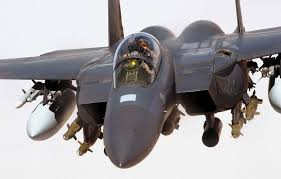
The F-15 Jet – The Fitter Jet is widely considered one of the most successful fighter aircraft in military history. Developed during the Cold War, it was designed primarily for air superiority. However, over time, it evolved into a multi-role combat aircraft capable of precision strikes, ground attacks, and long-range missions.
Below is a complete, well-structured guide covering its history, development, variants, and countries that used the F-15 in real wars, with detailed explanations.
Origin & Development of the F-15
The F-15 was developed by McDonnell Douglas (later merged with Boeing) for the United States Air Force.
Why Was It Built F-15 Jet – The Fitter Jet?
During the late 1960s, the United States became concerned about advanced Soviet fighters like the MiG-25 Foxbat. Consequently, the U.S. wanted a fighter that could dominate the skies with superior speed, radar, and missile capability.
Thus, in 1969, the F-15 program officially began.
The first flight occurred in 1972, and by 1976, it entered service.
Key Features of the F-15
The F-15 was revolutionary for several reasons:
- Twin-engine design (extra power & safety)
- Top speed over Mach 2.5
- Advanced radar systems
- Long combat range
- High thrust-to-weight ratio (can accelerate vertically)
- Carries air-to-air and air-to-ground weapons
Most importantly, the F-15 has an unmatched air-to-air combat record of over 100 victories with zero losses in aerial combat (according to U.S. and Israeli records).
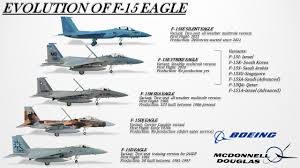
Major Variants of the F-15 – F-15 Jet – The Fitter Jet
Over time, several versions were developed:
- F-15A/B – Early air superiority models
- F-15C/D – Improved radar & electronics
- F-15E Strike Eagle – Multi-role strike fighter
- F-15EX Eagle II – Latest modernized version
The United States Air Force currently operates the advanced F-15EX.
1) F-15A/B – Early Air Superiority Models
- Introduction: The F-15A (single-seat) and F-15B (two-seat trainer) were the original production versions of the F-15, first flown in the early 1970s.
- Role: Designed primarily for air superiority, intended to gain and maintain control of the skies.
- Avionics & Radar: Equipped with the AN/APG-63 radar, which was advanced for its era, capable of long-range target detection and tracking multiple aerial targets.
- Engines: Powered by two Pratt & Whitney F100-PW-100 afterburning turbofan engines, giving it exceptional speed and climb rate.
- Armament: Typically carried AIM-7 Sparrow and AIM-9 Sidewinder missiles, plus an internal M61 Vulcan 20mm cannon.
- Performance: Maximum speed of Mach 2.5, service ceiling of 65,000 feet, and exceptional maneuverability, making it dominant against older Soviet aircraft.
- Operational History: Saw extensive testing and limited combat evaluation before upgrades in later versions. The F-15A/B established the foundation of F-15 dominance in aerial combat.
2) F-15C/D – Improved Radar & Electronics – F-15 Jet – The Fitter Jet
- Introduction: The F-15C (single-seat) and F-15D (two-seat trainer) were upgraded versions of the F-15A/B, entering service in the early 1980s.
- Improvements Over A/B:
- Stronger Airframe: Reinforced for higher G-load maneuvers.
- Advanced Radar: AN/APG-63 radar updated with better target detection and tracking.
- Electronics: Modernized cockpit, better avionics, and improved electronic warfare countermeasures.
- Role: Continued air superiority, capable of defeating multiple enemy aircraft simultaneously.
- Armament: Compatible with AIM-120 AMRAAM, AIM-7 Sparrow, AIM-9 Sidewinder, and M61 Vulcan cannon.
- Performance: Improved maneuverability, extended range, and increased payload compared to F-15A/B.
- Operational History:
- Dominated in air-to-air combat scenarios, achieving a 100% kill ratio in conflicts such as Gulf War 1991.
- Still in service today as a key air superiority fighter for the US Air Force.
3) F-15E Strike Eagle – Multi-role Strike Fighter
- Introduction: The F-15E Strike Eagle is a dual-role fighter-bomber, introduced in the late 1980s.
- Role: Unlike the C/D models, the F-15E can perform deep-strike missions, close air support, and air-to-ground attacks, while retaining air-to-air capability.
- Crew: Two seats – pilot and weapon systems officer for managing strike missions.
- Avionics & Radar:
- Equipped with AN/APG-70 radar, terrain-following radar, and LANTIRN targeting pods for night and low-visibility operations.
- Can track ground targets and guide precision munitions.
- Armament:
- Air-to-air: AIM-120 AMRAAM, AIM-9 Sidewinder
- Air-to-ground: JDAM, GBU-15, laser-guided bombs, and conventional bombs
- Cannon: M61 Vulcan 20mm
- Performance:
- Speed: Mach 2.5
- Combat range: ~2,400 miles with external tanks
- High payload capacity: up to 23,000 lbs of ordnance
- Operational History:
- Extensively used in Desert Storm, Operation Enduring Freedom, and Iraq War.
- Renowned for precision strike capability combined with survivability and speed.
4) F-15EX Eagle II – Latest Modernized Version
- Introduction: The F-15EX Eagle II is the latest F-15 variant, designed for 21st-century warfare, entering service in the 2020s.
- Role: Multi-role fighter, capable of air superiority, strike missions, and integrated network-centric warfare.
- Avionics & Radar:
- Equipped with AN/APG-82(v)1 AESA radar, capable of tracking more targets at longer ranges.
- Advanced electronic warfare suite, radar jamming, and data link connectivity for integrated operations.
- Crew: Single-seat, with optional two-seat configuration for training or complex missions.
- Armament:
- Can carry all legacy F-15 weapons, plus hypersonic missiles and next-gen weapons.
- Advanced air-to-air and air-to-ground munitions.
- Performance & Upgrades:
- Reinforced airframe for longer life (20,000 flight hours)
- Faster sortie generation, lower maintenance costs
- Can carry heavier payloads than F-15E
- Operational Importance:
- Designed to complement F-35 and F-22 fighters in modern combat.
- Key upgrade to maintain dominance in high-threat environments while integrating networked warfare capabilities.
Countries That Used F-15 in Real Wars
Now, let’s discuss which countries actually used the F-15 in real combat situations.
🇺🇸 1. United States
The United States has used the F-15 in multiple wars.
🔹 Gulf War (1991) – F-15 Jet – The Fitter Jet
During the Gulf War, U.S. F-15C fighters destroyed dozens of Iraqi aircraft. In fact, most of the coalition’s air-to-air victories came from F-15s.
Additionally, F-15E Strike Eagles conducted deep strike missions against Iraqi targets.
🔹 Iraq War (2003) – F-15 Jet – The Fitter Jet
In the Iraq War, F-15E jets played a major role in bombing strategic sites, including command centers and missile launchers.
🔹 Afghanistan War – F-15 Jet – The Fitter Jet
After 9/11, during the War in Afghanistan, F-15E aircraft provided close air support to ground troops.
🔹 Syria & Anti-ISIS Operations – F-15 Jet – The Fitter Jet
Furthermore, F-15 jets were used in airstrikes against ISIS targets in Syria and Iraq.
🇮🇱 2. Israel
Israel is one of the most successful F-15 operators.
The Israeli Air Force has used F-15s in multiple conflicts.
🔹 Lebanon War (1982)
During the 1982 Lebanon War, Israeli F-15s shot down numerous Syrian aircraft, including MiG fighters. Notably, they achieved complete air superiority.
🔹 Operation Opera (1981)
In 1981, Israel launched Operation Opera to destroy Iraq’s nuclear reactor. Although F-16s carried out the bombing, F-15s provided escort and air cover.
🔹 Syria Airstrikes (2010s)
Moreover, Israel has used F-15s in airstrikes against Iranian targets in Syria.
🇸🇦 3. Saudi Arabia
The Royal Saudi Air Force operates F-15s.
🔹 Yemen War
During the Yemen conflict against Houthi forces, Saudi F-15s conducted extensive airstrikes. However, some F-15 aircraft were reportedly shot down by ground fire.
🇯🇵 4. Japan
The Japan Air Self-Defense Force operates F-15J variants.
Although Japan has not used F-15s in full-scale war, they frequently intercept Chinese and Russian aircraft near Japanese airspace.
🇰🇷 5. South Korea
The Republic of Korea Air Force uses F-15K Strike Eagles.
While South Korea has not fought a major war using F-15s, they maintain combat readiness against North Korea.
🇶🇦 6. Qatar
The Qatar Emiri Air Force recently purchased F-15QA variants. However, they have not yet used them in war.
Has the F-15 Ever Been Shot Down?
Interestingly, no F-15 has ever been lost in air-to-air combat.
However:
- Some were damaged by ground fire.
- A few crashed due to accidents.
- Saudi F-15s faced losses in Yemen.
Still, its combat record remains one of the best in aviation history.
Why Is the F-15 Still Important Today?
Even though newer jets like the F-22 and F-35 exist, the F-15 remains important because:
- It carries more missiles than stealth jets.
- It has long operational range.
- The F-15EX can carry hypersonic weapons.
- It is cost-effective compared to 5th-generation fighters.
Therefore, despite being designed in the 1970s, it continues to serve modern air forces.
Summary – Countries That Used F-15 in War
| Country | Used in Real War? | Conflict |
|---|---|---|
| United States | ✅ Yes | Gulf War, Iraq War, Afghanistan |
| Israel | ✅ Yes | Lebanon War, Syria Strikes |
| Saudi Arabia | ✅ Yes | Yemen War |
| Japan | ❌ No full war | Air interceptions |
| South Korea | ❌ No major war | Defense role |
| Qatar | ❌ No | No combat yet |
Final Conclusion
In conclusion, the F-15 jet is one of the most powerful and battle-proven fighter aircraft ever built. Initially designed for Cold War air superiority, it quickly became a multi-role combat machine.
Moreover, countries like the United States, Israel, and Saudi Arabia have used it extensively in real wars. Meanwhile, other nations operate it mainly for defense and deterrence.
Because of its speed, power, radar strength, and missile capacity, the F-15 continues to dominate even in modern warfare.
Pingback: DLSS AI Technology - How It Works -