
The name Mojtaba Khamenei (3rd Supreme Leader Of Iran) has increasingly drawn international attention in recent years. As the son of Ali Khamenei, the long-time Supreme Leader of Iran, Mojtaba grew up inside one of the most influential political families in the Middle East.
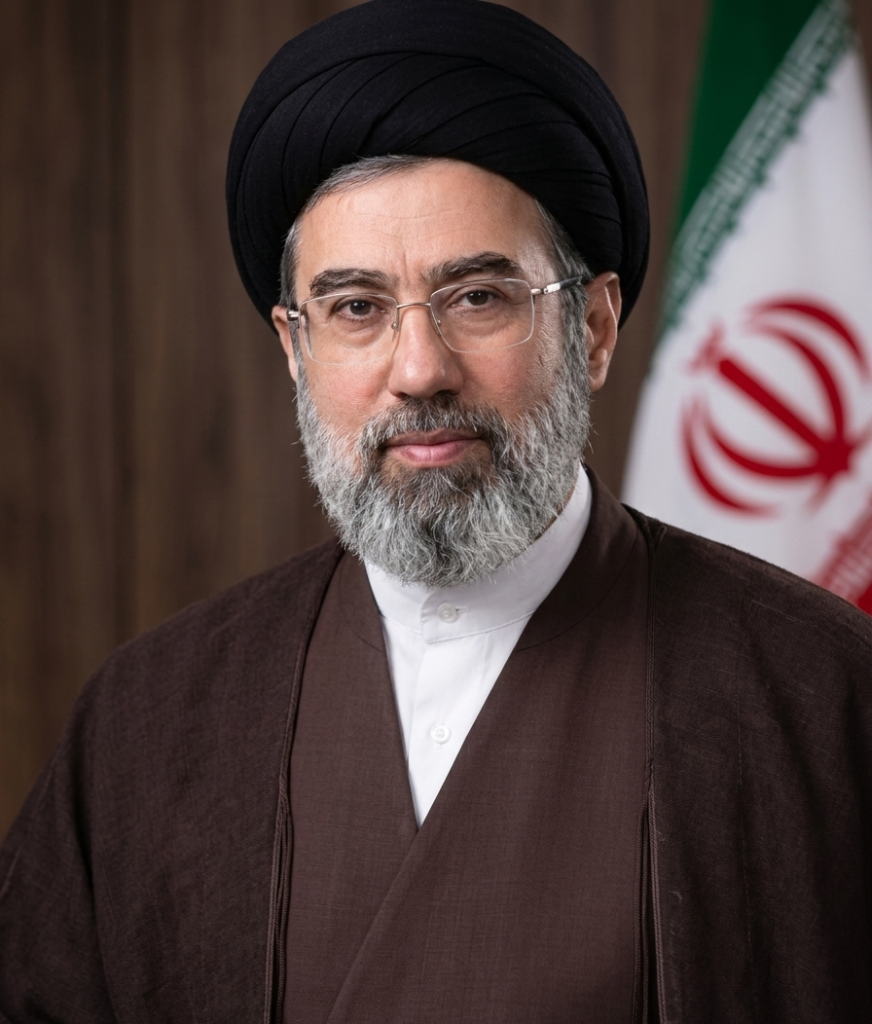
While he spent most of his early life away from the public spotlight, analysts and political observers have long believed that he played a significant role behind the scenes in Iranian politics. Understanding Mojtaba’s background requires exploring not only his own life but also the revolutionary history that shaped modern Iran.
Early Life and Childhood of Mojtaba Khamenei
Mojtaba Khamenei was born in 1969 in the city of Mashhad, Iran. Mashhad is one of the country’s most important religious centers and home to the shrine of Imam Reza, a key figure in Shia Islam.
Mojtaba grew up in a deeply religious household. His father, Ali Khamenei, was already known as a revolutionary cleric opposing the monarchy of Mohammad Reza Pahlavi, the last Shah of Iran.
During Mojtaba’s childhood, Iran was undergoing massive political upheaval. The protests and revolutionary movements eventually led to the historic Iranian Revolution, which overthrew the Shah and established the Islamic Republic under Ruhollah Khomeini.
Growing up during this revolutionary period had a major influence on Mojtaba’s worldview and political ideology.
Family Background and Religious Environment
The Khamenei family belongs to a respected clerical lineage. Mojtaba’s father, Ali Khamenei, studied Islamic theology and became a close ally of Ayatollah Ruhollah Khomeini, the founder of the Islamic Republic.
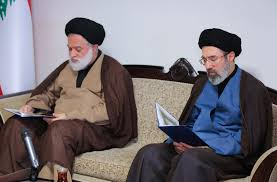
After the 1979 revolution, Khomeini became Iran’s first Supreme Leader, and Ali Khamenei rose quickly within the new political structure. This meant that Mojtaba spent his childhood in an environment closely connected to the new ruling elite of Iran.
Unlike many political families in other countries, however, the Khameneis maintained a relatively modest lifestyle. Reports from those who knew the family describe their home as simple and strongly focused on religious education.
Education and Religious Training
Like many sons of prominent clerics in Iran, Mojtaba Khamenei pursued religious education rather than a traditional university career.
He studied Islamic theology in the city of Qom, which is considered the most important center of Shia religious scholarship in the country.
In Qom, Mojtaba studied under several respected clerics and focused on:
- Islamic jurisprudence (fiqh)
- Quranic interpretation
- Shia theology
- Political philosophy in Islamic governance
This education helped him build connections within Iran’s clerical establishment, which later played a role in his political influence.
Mojtaba Khamenei During the Iran–Iraq War
When the Iran–Iraq War broke out in 1980, Iran faced a massive military challenge from neighboring Iraq under Saddam Hussein.
During the war, many young Iranians volunteered for military service. Reports indicate that Mojtaba participated in the war effort as a member of forces linked to the Islamic Revolutionary Guard Corps.
Although his role was not widely publicized, the war shaped the political mindset of an entire generation of Iranian leaders. It also strengthened the Revolutionary Guard’s influence within Iran’s political system.
The Rise of Ali Khamenei as Iran’s Supreme Leader
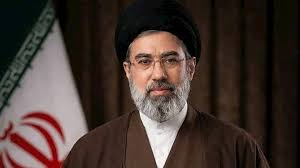
To understand Mojtaba’s influence, it is essential to understand the rise of his father.
After the death of Ruhollah Khomeini in 1989, Iran’s leadership faced a major transition. The Assembly of Experts, the clerical body responsible for selecting the Supreme Leader, chose Ali Khamenei for the role.
This decision made Ali Khamenei the second Supreme Leader of Iran and placed the Khamenei family at the center of the country’s political power.
From that point onward, Mojtaba lived within one of the most powerful political circles in the Islamic Republic.
Mojtaba Khamenei’s Growing Influence
For many years, Mojtaba Khamenei (3rd Supreme Leader Of Iran) remained largely out of public view. Unlike other political figures, he rarely gave interviews or speeches.
However, insiders and political analysts often described him as an influential adviser to his father.
His influence was believed to be strongest in three areas:
1. Relations with the Revolutionary Guard
Mojtaba developed strong connections with leaders of the Islamic Revolutionary Guard Corps (IRGC), one of Iran’s most powerful institutions.
2. Conservative Clerical Networks
He maintained close ties with conservative clerics in Qom who supported the continuation of the Islamic Republic’s political system.
3. Electoral Politics
Some reports suggested that Mojtaba played a role in supporting conservative candidates during Iranian elections.
Controversies and Political Debate
Despite his influence, Mojtaba Khamenei has also been a controversial figure.
Critics argue that his political role represents an unofficial concentration of power within the Khamenei family. Some opponents of the government have accused him of interfering in political processes.
Supporters, however, say that Mojtaba’s influence comes from his religious training and loyalty to the Islamic Republic.
These debates have made him one of the most discussed but least publicly visible figures in Iranian politics.
Personal Life of Mojtaba Khamenei
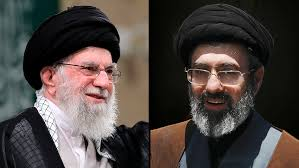
Compared with many global political figures, Mojtaba Khamenei maintains a very private personal life.
Marriage and Family
He is married to the daughter of Gholam‑Ali Haddad‑Adel, a prominent Iranian politician who once served as the Speaker of the Iranian parliament.
The marriage strengthened Mojtaba’s ties with influential conservative political circles in Iran.
Lifestyle of Mojtaba Khamenei (3rd Supreme Leader Of Iran)
Reports describe Mojtaba as living a relatively modest life, consistent with the lifestyle expected of senior clerics in Iran.
Role in Iranian Politics Over the Years
Although he never held elected office, Mojtaba has often been described as an important behind-the-scenes figure in Iran’s political system.
Analysts believe he has helped coordinate relations between:
- Religious leaders
- Security institutions
- Conservative political movements
This network of relationships has given him significant informal influence.
The Future of Mojtaba Khamenei
In recent years, speculation about Mojtaba’s political future has intensified. Some analysts have suggested that he could eventually become one of the most powerful leaders in Iran.
If that happens, it would represent a historic moment because the Islamic Republic was originally founded to reject hereditary political rule.
Nevertheless, supporters argue that leadership continuity is necessary for maintaining stability in Iran’s political system.
Conclusion
The life of Mojtaba Khamenei reflects the complex history of modern Iran. From his childhood during the Iranian Revolution, to his religious education in Qom, to his quiet but influential role in Iranian politics, his journey has been closely connected to the rise of the Islamic Republic.
As the son of Ali Khamenei, one of the most powerful leaders in the Middle East, Mojtaba has grown up within a political system shaped by revolution, war, and ideological struggle.
Whether he remains an influential cleric behind the scenes or eventually becomes a central figure in Iran’s leadership, his story will continue to play a role in shaping the future of the country.