
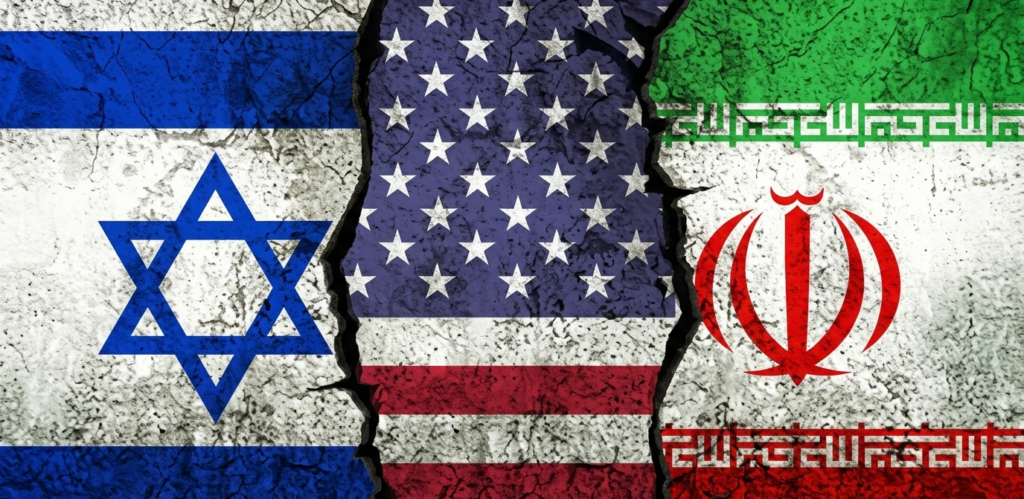
Technically speaking, as of now, there has been no formal declaration of war between the United States and Iran, nor between Israel and Iran. ( Was There an Official War between Iran-USA-Israel? )
However, although Congress did not officially declare war, military strikes and counter-strikes did occur. And therefore, while some call it “war in Iran,” others describe it as a “major escalation,” “military confrontation,” or “limited strikes.” In other words, legally it may not be a declared war — but militarily, it certainly feels like one.
How Did the Conflict Start?
To understand why Israel attacked Iran or why the US struck Iran, we must go back several years.
Nuclear Tensions
For years, Iran’s nuclear program has been a major source of tension. The US and Israel believe Iran is attempting to develop nuclear weapons. Iran, on the other hand, insists its program is peaceful.
Because of this disagreement:
- The US imposed heavy economic sanctions.
- Israel threatened pre-emptive strikes.
- Iran strengthened missile and drone capabilities.
As tensions increased, diplomacy weakened. Eventually, targeted strikes began.
Did Israel Attack Iran?
Yes — Israeli forces carried out strikes targeting Iranian military infrastructure. Reports from various media outlets indicated explosions near strategic sites in Tehran. At the same time, military alert levels were raised in Tel Aviv.
Israel justified its actions as “defensive.” According to Prime Minister Netanyahu, Iran’s missile and drone activities posed an existential threat. Therefore, Israel argued it had the right to act pre-emptively. However, Iran called these attacks acts of aggression.
Did the US Bomb Iran?
The question “Did the US bomb Iran?” became one of the most searched terms globally.
The answer is: US forces conducted targeted strikes against Iranian-linked facilities. These strikes reportedly focused on:
- Missile storage sites
- Drone facilities
- Military command structures
Some operations involved long-range precision weapons, including cruise missiles like the Tomahawk missile. Nevertheless, US officials stated the strikes were limited and not meant to trigger full-scale war.
1. Missile Storage Sites in Iran — Was There an Official War between Iran-USA-Israel?
Missile storage sites are locations where a country keeps its stockpiles of ballistic, surface-to-surface, and cruise missiles — often in bunkers, underground facilities, or hardened shelters to protect them from pre-emptive strikes.
Key Known and Reported Missile Storage Sites
Kermanshah Underground Missile Facility
- This is a confirmed underground missile base in western Iran’s Kermanshah province.
- It is operated by the Islamic Revolutionary Guard Corps Aerospace Force (IRGCASF), one of Iran’s most strategic forces.
- The facility stores long-range ballistic missiles such as Qiam-1 and Fateh-110, both designed to hit deep into enemy territory. These missiles can be launched quickly from below ground to avoid detection.
Underground & Hidden Storage Complexes
Iran reportedly has multiple underground or buried bunkers and hardened missile depots across its territory. Satellite imagery shows these sites being strengthened and concealed in response to threat alerts, especially after past strikes. Fortifications like thick concrete shields and buried entrances help protect missiles from bombings.
Why Underground Matters
- Missiles are safe from air raids or satellites when hidden deep below.
- They can be launched unexpectedly, making them harder to pre-emptively destroy.
- During high tension periods, Iran buries entrances and hides new facilities under soil and camouflage.
Evidence from Conflict Footage – Was There an Official War between Iran-USA-Israel?
Videos and open-source reports from the 2025 conflict show missile storage areas on the outskirts of Tehran being hit by airstrikes, suggesting Iran’s missile stockpiles extend beyond one region and are spread out across multiple strategic points.
2. Drone Facilities — Where Iran Makes and Houses UAVs
Iranians refer to drones as UAVs (Unmanned Aerial Vehicles). These are extremely important because they are cheaper, harder to detect than fighter jets, and can be used for precision strikes.
Major Drone Manufacturing & Deployment Centers
Qods Mohajer 10 Production
- One of Iran’s most advanced drones is the Qods Mohajer 10, unveiled in 2023.
- It has long range (~2000 km) and can stay in the air for extended operations carrying weapons or surveillance gear.
- These drones were developed and manufactured by Iranian aerospace industries controlled by the military.
Secret Drone Facilities & Expansion Near Qom
Media reports and leaked material indicate that Iran maintains secret drone factories, including one where it trains and supplies UAVs to allied groups such as Hezbollah. These facilities are often hidden and spread out to minimize vulnerability.
Underground Airbases Like Oghab 44
One of the most important strategic locations is Oghab 44, an underground airbase, which:
- Houses fighter jets and drone units inside deep underground hangars.
- Includes fuel storage, repair facilities, navigation systems, and command posts.
- Helps keep drones and aircraft safe from detection and pre-emptive strikes.
This mix of drones and aircraft in a buried base shows how Iran makes its aerial capabilities hard to destroy.
3. Military Command Structures — How Iran Coordinates Its Armed Forces
To understand Iran’s military command, you need to know that its forces are split between:
- The regular army (Artesh)
- And the Islamic Revolutionary Guard Corps (IRGC), which has its own command hierarchy and is separate from the regular military.
Key Command Centers
IRGC Headquarters & Command Nodes
Iran’s top leaders within the IRGC — such as the commander and aerospace force leaders — operate from well-protected command headquarters dispersed across Tehran and other strategic cities. These command posts coordinate missile launches, drone operations, air defenses, and regional proxy activities.
During raids in June 2025, reports suggested strikes targeted IRGC command buildings and leadership bunkers, indicating their importance in planning and execution of operations.
Networked Command & Control (C2) Architecture
Iran’s command structure uses networked communications connecting:
- Air defense radar systems
- Missile launch systems
- Drone control centers
- Regional ground forces
This decentralized network is designed so that if one node is hit, command can continue from another — making the system more resilient to airstrikes.
Role of Centralized Strategic Command Posts
Some command centers include:
- Oversight of missile deployment and protection
- Air defense integration with systems like the Raad air defense system, which combats aerial threats to protect command sites.
- Coordination with space and radar facilities that track threats
Shahroud Space Center – Was There an Official War between Iran-USA-Israel?
Although officially a space launch site, Shahroud Space Center doubles as a strategic military launch and testing area for missile and satellite systems. These facilities serve dual roles in space operations and defense coordination.
Why Is the US Attacking Iran?
This question requires careful explanation. The United States claims its actions were in response to:
- Iranian attacks on US bases
- Drone threats to US forces
- Escalation by Iran-backed groups in the region
For example, bases such as Naval Support Activity Bahrain were reportedly placed on high alert due to regional missile threats.
Therefore, from Washington’s perspective, the strikes were defensive and deterrent in nature. However, Iran sees it differently. Tehran argues that US actions violate international law and sovereignty.
Did Iran Attack the US?
Yes — Iran responded.
Following US and Israeli strikes, Iran launched missile and drone attacks targeting:
- US military bases in the region
- Israeli defense installations
- Strategic military infrastructure
Iran’s leadership, including Supreme Leader Ali Khamenei, warned of “severe retaliation.”
However, although there were explosions and missile interceptions, the damage appeared limited compared to fears of full-scale war.
Media Narratives – Was There an Official War between Iran-USA-Israel?
Interestingly, media coverage varied widely.
- Fox News emphasized US strength and retaliation.
- CNN focused on escalation risks.
- Al Jazeera highlighted civilian concerns in Iran.
- BBC News stressed diplomatic consequences.
- The New York Times analyzed strategic calculations.
- The Wall Street Journal focused on economic and oil market impacts.
Therefore, depending on which source you followed — FoxNews, CNN Live, BBC World News, or Al Jazeera English — the tone felt different. This shows how information warfare also plays a role.
Role of Donald Trump
Although not currently the president in some contexts of analysis, Donald Trump’s previous Iran policies heavily shaped the situation. Supporters argue his hardline stance deterred Iran. Critics argue it escalated tensions.
His withdrawal from the Iran nuclear deal years ago increased tension dramatically. Furthermore, his use of platforms like Truth Social to comment on Iran kept the issue politically charged.
Role of Iran’s Supreme Leadership
Iran’s leadership structure is unique. While the president plays an administrative role, the Supreme Leader holds ultimate authority.
Ali Khamenei has consistently stated that Iran will not surrender to foreign pressure. Additionally, the IRGC has strengthened regional alliances and proxy networks.
Therefore, when strikes occurred, Iran responded not only militarily but rhetorically — portraying itself as defending national sovereignty.
Did Congress Declare War?
No.
The US Constitution requires Congress to declare war formally. That did not happen. Instead, operations were conducted under executive authority, citing defense powers.
This raised debates in Washington:
- Are we at war?
- Is the US at war with Iran?
- Why did we attack Iran?
- Did Congress approve?
Politically, the debate remains unresolved.
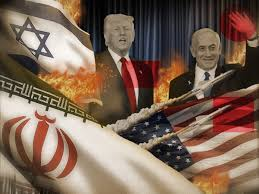
Russia’s Position
Russia condemned US and Israeli strikes. Moscow described them as destabilizing actions.
Although Russia did not directly enter the conflict, its diplomatic backing of Iran complicates the situation. Therefore, analysts worry about broader regional consequences.
Economic Impact
Even limited strikes had global consequences:
- Oil prices surged.
- Stock markets reacted nervously.
- Flight routes changed.
- Insurance costs increased.
Flight tracking systems showed aircraft rerouting to avoid Iranian airspace. Thus, even without a declared war, the economic ripple effects were immediate.
Iran Retaliation: Was It Effective?
Iran launched missile strikes and drone waves. However, Israeli defense systems intercepted many threats.
Similarly, US missile defense systems neutralized incoming projectiles. Therefore, while retaliation occurred, it did not cause catastrophic damage. This suggests both sides aimed to show strength without crossing the line into all-out war.
Has Anyone Won?
Now we return to the central question: Who won the Iran-Israel-America war?
The honest answer: No one.
Here’s why:
- Iran’s government remains in power.
- Israel remains militarily intact.
- The US has not escalated into invasion.
- No regime change occurred.
- No destruction occurred.
Instead, this appears to be a limited confrontation.
Why Are We Going to War With Iran?
Public fear often spreads faster than missiles.
- “Are we going to war with Iran?”
- “Is America going to war?”
- “Why are we bombing Iran?”
- “Did we bomb Iran today?”
- “Is the US at war?”
show how anxious people are. However, leaders from all sides appear cautious about triggering World War-level escalation.
Why Did Israel Attack Iran?
From Israel’s perspective:
- Prevent nuclear weapon development.
- Deter missile threats.
- Signal strength regionally.
From Iran’s perspective:
- Israel is destabilizing the region.
- Strikes violate sovereignty.
Therefore, both sides frame themselves as defensive.
What Happens Next?
Several possible outcomes exist:
- De-escalation through diplomacy.
- Continued limited strikes.
- Proxy conflicts in the Middle East.
- Broader regional war (least desired scenario).
Currently, signs suggest controlled escalation rather than full invasion.
Information Warfare & Propaganda
In modern conflict, narrative matters as much as missiles.
Each side claims:
- Victory
- Deterrence
- Strength
Meanwhile, global media amplifies different angles.
Therefore, perception sometimes matters more than territory.
Civilian Impact
Although strikes targeted military infrastructure, civilians always feel indirect effects:
- Fear
- Economic uncertainty
- Travel disruption
- Rising fuel prices
Thus, even limited war creates global anxiety.
Final Verdict: Who Won?
After analyzing:
- Military strikes
- Political responses
- Economic impact
- Media narratives
- Regional reactions
The conclusion is clear:
- There is no decisive winner.
- There is no declared total war.
- There is controlled escalation.
Iran survived.
Israel demonstrated capability.
The United States projected power.
Conclusion
The Iran–Israel–America conflict is complex, layered, and evolving. Although missile strikes and bombing occurred, this is not yet a conventional declared war.
Therefore, when people ask:
- Did the US bomb Iran?
- Did Israel attack Iran?
- Is the US at war?
- Why are we attacking Iran?
- Are we going to war?
The accurate answer is:
There have been strikes, yes.
There has been retaliation, yes.
But there is no final winner.
Instead, what we are witnessing is strategic signaling — a dangerous game of deterrence where every side wants strength without catastrophe.
And ultimately, in such confrontations, the real “winner” is often the side that avoids total war.
Pingback: F-15 Jet – The Fitter Jet -
Pingback: Iran and Iranians 2026 -
Pingback: Details About Lunar Eclipse 2026 North America -